Skip to the main content.
Give Give Monthly
Give Give Monthly

Author: John Stonestreet and Andrew Carico

Christianity is a worldview that is fundamentally word-centered. Words are central to God’s nature, purposes, and work in the Creation, Redemption, and Restoration of the world. According to Genesis 1, God spoke creation into existence. His power and authority are displayed in the words that brought reality into being.  

In this sense, postmodern thinkers are not entirely wrong to claim that words shape reality or that narratives provide the structure in how we know. What they miss is Whose words create the world and Whose story we are in. Only within the Christian worldview is the true nature and purpose of language understood. Could you even imagine the world without the wheel? It’s simple, really, but undeniably one of the most important inventions in the history of the world. Think of the vast areas of industry and progress made possible from that one small stroke of genius. 

Yet, when LIFE Magazine ranked the 100 most important events and people of the past millennium, it was Johannes Gutenberg’s 1455 printing of the Bible, using his movable-type printing press, that came in at number one. Why has the written word, even more than our greatest technical innovation, exercised such enduring cultural power? 

Joel J. Miller explored this in The Idea Machine: How Books Built Our World and Shape Our Future. In it, Miller traced the development of “the book” and explained why it remains a vital force for shaping culture and thought, even amid declining literacy and various large language models that write for us. 

For Miller, books function as both hardware and software; a physical format uniquely suited for human interaction and knowledge transmission, and a tool that spreads ideas across time and space. From ancient scrolls to the codex, books and the words they contain have built the world. As Miller put it: 

Books are a portable collection of written ideas designed to elevate the human mind beyond its natural limits of experience, memory, distance, and time. They’re a vessel for numbers, narratives, laws, and lyrics. They facilitate history, politics, philosophy, religion, science, and self-discovery. They enshrine traditions while providing direction as they shift and grow. They inform the ignorant, remind the learned, travel far, and cheat death. 

Christians, in particular, have long advanced books as instruments of cultural renewal, and for good reason. As N. T. Wright has argued, biblical inspiration applies not only to what Scripture says but also to how God chose to say it. God revealed Himself both through and as “the Word.” From inspired authors who wrote stories, poems, parables, and letters, the medium and the message are divinely intertwined. 

This explains why early Christians were instrumental in the development of the book. The zeal to preserve and spread the Gospel drove innovations in format, design, and production. Miller describes how “the sheer bookishness of early believers” accelerated the advancement and design of books to spread the Good News. 

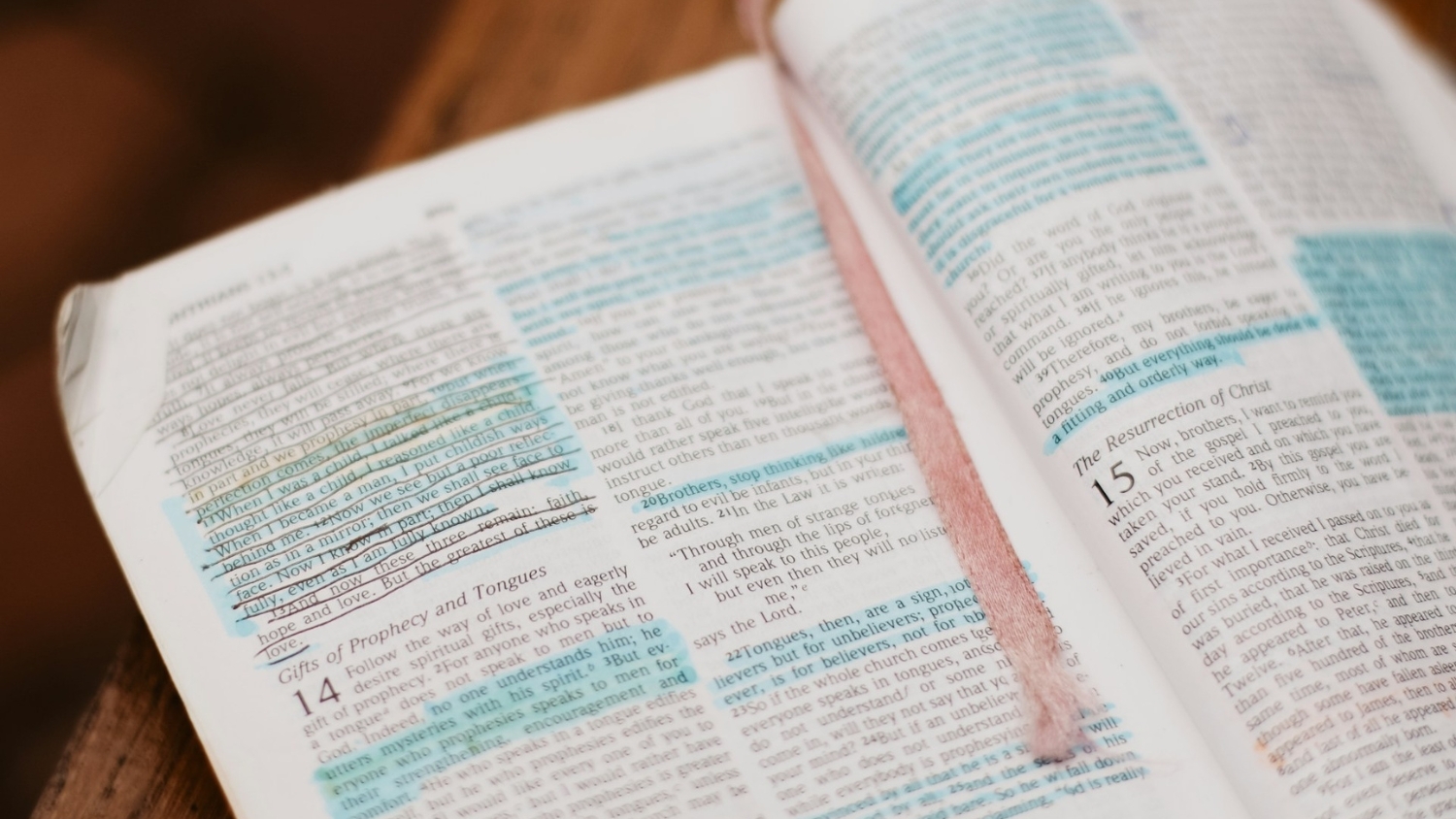
John 1 identifies Jesus Christ, our Redeemer, as the Word himself. “In the beginning was the Word, and the Word was with God, and the Word was God . . .” Despite repeated predictions in the modern age that images will eventually replace words, whether from television or the internet, God’s created order runs the other direction: images must serve the Word. The Word does not serve images. 

Colossians 1 teaches that all things are held together in Christ, Who is the Word. Thus, the universe is infused with God’s words and is sustained by them. Hebrews 1 also tells us it is Christ who “upholds the universe by the word of his power.” Books, therefore, matter because they reflect humanity’s created capacity to use words to communicate truth and shape culture—imitating, though never replacing, the Author of creation. 

These passages are themselves part of a collection of books bound together as God’s revealed Word—the only book that is divinely inspired, inerrant, and infallible. Jesus declared that His words “will not pass away,” and Peter reminds that “the word of the Lord endures forever.” 

Though the wheel made possible the expansion of territory and industry, books expanded the human mind and delivered salvation to the human soul. Words are how God chose to express His nature and are embedded in His created order. This truth is crucial to remember in an age when the very books growing dusty on the shelf can spark new ideas and genuine creativity in ways that artificial intelligence—which merely rearranges existing patterns and regurgitates content—cannot. 

Like Augustine, we should heed the call to “take up and read,” and even when appropriate, take up the pen and write! Both acts are among the most God-honoring and culture-restoring practices in which a Christian can engage. 

Getting God Right

Getting God Right

Author: John Stonestreet and Thaddeus Williams

Read More
Where Has All the Creativity Gone?

Where Has All the Creativity Gone?

Author: John Stonestreet and Andrew Carico

Read More