Skip to the main content.
Give Give Monthly
Give Give Monthly

2 min read

The Human Brain Is Better than Artificial Ones

The Human Brain Is Better than Artificial Ones

Author: John Stonestreet and Dr. Timothy D. Padgett

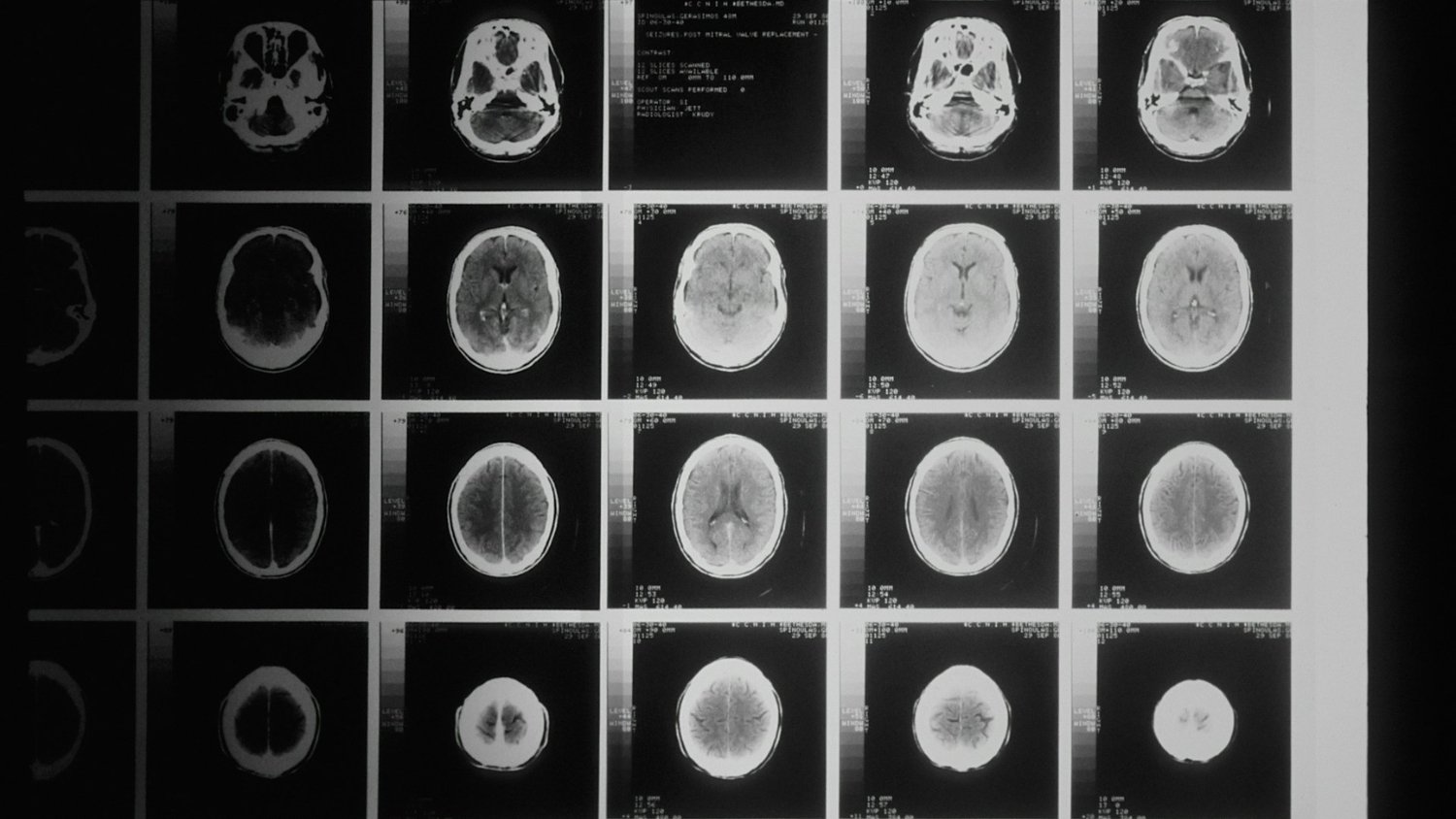
In a recent viral social media post, podcaster Aakash Gupta shared results from a 2024 study of the human brain. The study, he said, “should mass-humble every AI lab on the planet.” In it, scientists digitally mapped a cubic millimeter of the brain, equivalent to two grains of sand. The results are mindboggling.

The abstract for the paper described the speck as containing “about 57,000 cells, about 230 millimeters of blood vessels, and about 150 million synapses and comprises 1.4 petabytes.” A petabyte is a measure of memory capacity. So, as one website described,

[A] typical DVD holds 4.7 GB of data. That means a single terabyte of storage could hold 217.8 DVD-quality movies, while a single petabyte of storage could hold 223,101 DVD-quality movies.

Since the whole human brain is much, much larger than a cubic millimeter, that means that every person is walking around with a few hundred million DVDs worth of data. This, Gupta concluded, puts our work with AI within a larger context:

We’re building AI systems that loosely mimic neural networks while still unable to fully read the wiring diagram of a single cubic millimeter of the thing we’re trying to imitate. … Every AI model on Earth fits in a fraction of that. The brain runs on 20 watts and fits in your skull. The data center required to merely describe one-millionth of it would span 140 acres.

As impressive as their work is, the very best brains working in IT have a long way to go before their creations come close to what is inside an ordinary person’s head. And yet it is notable that our very best creations are mere imitations of what we find in biology. That is enough, to paraphrase Aslan, to “erect the head of the poorest beggar” and “to bow the shoulders of the greatest (AI engineer) on earth.” In fact, all should bow in amazement at what the Great Designer accomplishes every day.

Instead, such neurological discoveries often lead our brightest minds further into their hubris. The amazing storage and calculating capacities of the human mind are just another gap in our understanding, a gap traditionally filled by the religious. The more we learn, the thinking goes, the less we will need the placeholder fantasy of a Creator God, a higher order, or an ultimate meaning to life.

What is often missed, however, are the reductionistic implications of a Godless creation. In a materialist vision of the human person, the need for community is nothing more than herd-instinct. Our love for our spouse is bio-programming to reproduce. We don’t actually “love” our children; what we feel is what Richard Dawkins called the “selfish gene”.

Not only is this worldview morbid, it’s a fallacy of begging the question. As Brian Sickler noted in his book, God on the Brain:

Before we start doing science, can we know ahead of time that no intelligent mind is behind the structures we are going to study? It seems that the only way we could know that is if we have reason to think the only things that exist are the very natural objects we are setting out to study. But how could science show us that?

It cannot. Instead, it is like saying that once someone understands how the rotors on a drone work, there’s no need for an operator behind it. It’s to make the mistake of Eustace in Voyage of the Dawn Treader when he said that stars are made of gas. He’s then corrected, “Even in your world, my son, that is not what a star is, but only what it is made of.”

The truth is, like artificial intelligence, human intelligence is far too complex to have happened by chance. Like a series of icebergs where there’s always more under the surface, the deeper we go in our understanding of Creation, from brain mechanics to quantum theory, the bigger the gaps become.