

Skip to the main content.
Give Give Monthly
Give Give Monthly

2 min read

Why Gen Z “Nones” Are Reconsidering Religion

Why Gen Z “Nones” Are Reconsidering Religion

Author: John Stonestreet and Dr. Glenn Sunshine
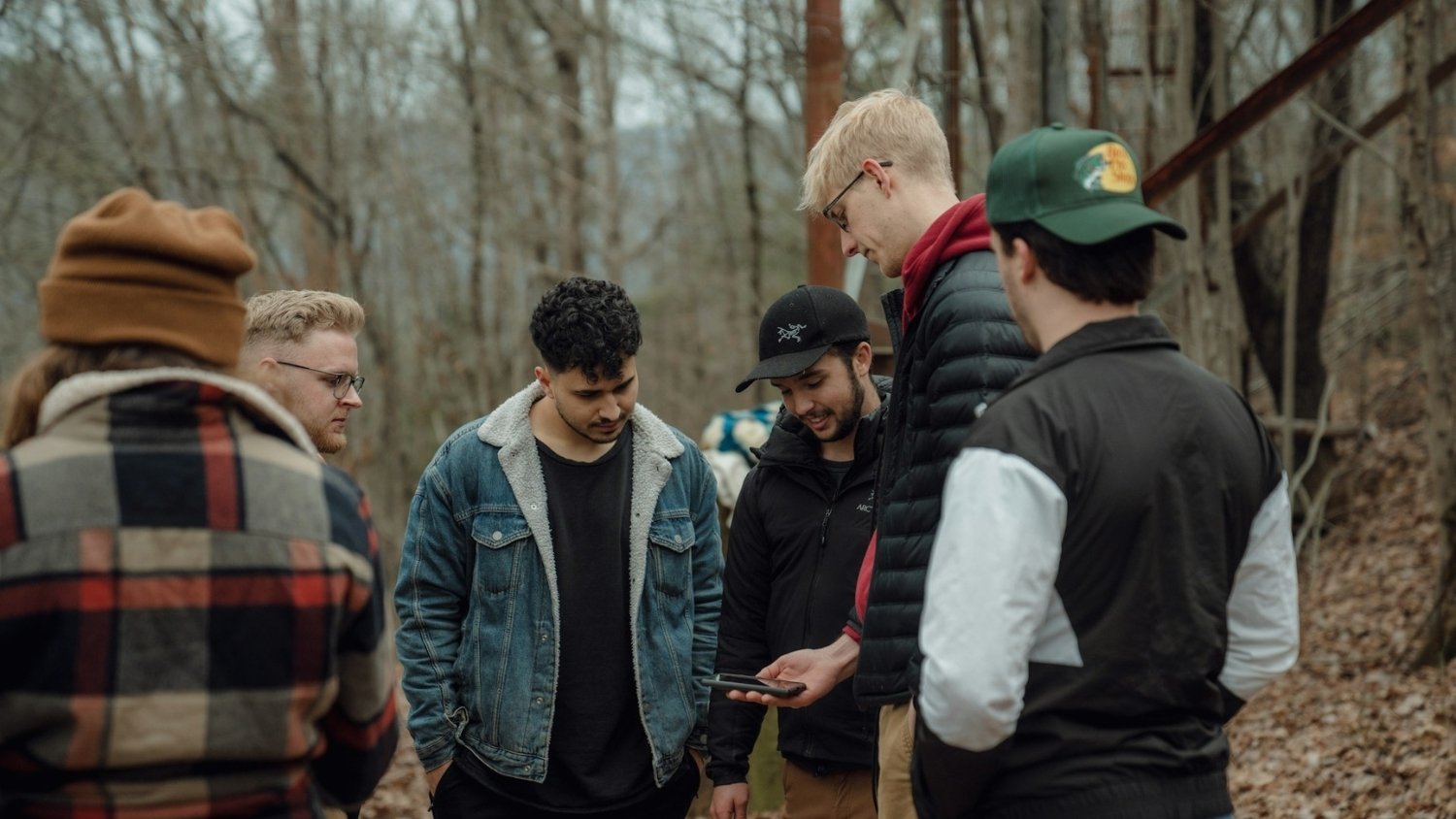
Gen Z is the least religious cohort in American history. 43% of this generation born roughly between 1996 and 2012 identify as religious “nones.” While there have been many reports since Charlie Kirk’s assassination indicating increased interest in religion and increased church attendance, according to statistician Ryan Burge, there is not yet statistical evidence of religious revival among young people.

There is, however, ample evidence that these Zoomers are looking for meaning and willing to reconsider religion. Specifically, though these trends may not be large enough to be captured in statistics, there seems to be a growing interest in more rigorous forms of faith.

In a recent article in Tablet magazine, Ani Wilcenski, a Zoomer herself, examined this phenomenon. While acknowledging that Gen Z is less religious than previous generations, Wilcenski, researched those bucking that trend, including converts to Islam, Jews who are becoming more observant, Latin Mass Catholics, Orthodox Christians, and others who are joining stricter, more traditional religious groups.

According to Wilcenski, Gen Z has been raised with the “illusion of infinite horizons,” and grew up “without sturdy institutions or fulfilling rites of passage.” As a result, for this generation, “[e]verything—career, identity, relationships—unfolds as a series of self-directed experiments,” something that has been labeled “liquid modernity.” Sociologist Zygmunt Bauman coined that phrase to describe the experience of life as unstable and non-permanent, without fixed distinctions, and no foundation for cultivating identity.

The experience of “liquid modernity” is why, according to Wilcenski, the ideological capture of Gen Z has been so comprehensive. For example, nearly one-quarter of the generation identify as LGBTQ, up nearly 20 points from previous generations. Ideology gives the illusion of a solid cause and offers a purpose for life where otherwise there is none.

Of course, that is the role religion traditionally played in Western culture. As Wilcenski noted, the draw of religion is that it provides a firm source of virtue and belonging, focus, and a sense of permanence. That’s what the Zoomers who are exploring more demanding forms of faith are most likely seeking.

As Wilcenski put it,

These faiths don’t adapt to the age—they expect the age to conform to them. Their rituals inconvenience, their authorities override preference, their truths don’t negotiate. And in a society allergic to absolutes, that refusal to dilute themselves holds a powerful magnetism.

As an example, Wilcenski quoted a 23-year-old woman who explained her decision to join a Carmelite monastery in Plough magazine: “I figured if I was going to do something crazy for our Lord I might as well go all in.” Like Wilcenski, the Plough article noted that young women who join strict religious orders are committing to something stable and permanent.

According to Wilcenski, when the Gen Zers turning to religion offer reasons why, they

sound more like escapes from modern chaos than declarations of faith…. [T]heir newfound religiosity is less about belief than about orienting life around something ultimate—something greater than the self.

That, of course, also leaves them vulnerable to religious falsehoods. Remember, Wilcenski not only researched conversions to Christianity but also to conservative forms of Judaism and Islam. The desire to escape “liquid modernity” says nothing about the genuineness of any faith that follows. The same motivation can explain the growing number of young men who are embracing political extremism, from Antifa to white nationalism.

It has long been the case that laxer forms of religion have declined while more demanding forms have grown or at least declined more slowly. The divide within this segment of Gen Z seems to be even more pronounced. This group will not be interested in churches that accommodate themselves to American culture. The seeker-sensitive model will not work. It probably never has.

The Church must be countercultural, unapologetic about even the weird things we believe, and unafraid to ask for serious commitment from people. It needs to explore the depths of the Gospel; it must explain life and its meaning, including hard truths about the human condition, rather than offer only shallow therapeutic or pragmatic applications. A church that does this will not only be able to counter destructive ideologies vying for all generations but will also be able to offer meaning and stability to a generation that is looking for both.

Some Good News from College Campuses

Some Good News from College Campuses

Authors: John Stonestreet and Dr. Glenn Sunshine
Read More
The Papal Conclave

The Papal Conclave

Authors: John Stonestreet and Dr. Glenn Sunshine
Read More
The O Antiphons of Advent

The O Antiphons of Advent

Author: John Stonestreet and Dr. Glenn Sunshine

Read More