



 Breakpoint
Author: John Stonestreet and Andrew Carico
“What are you thankful for?”
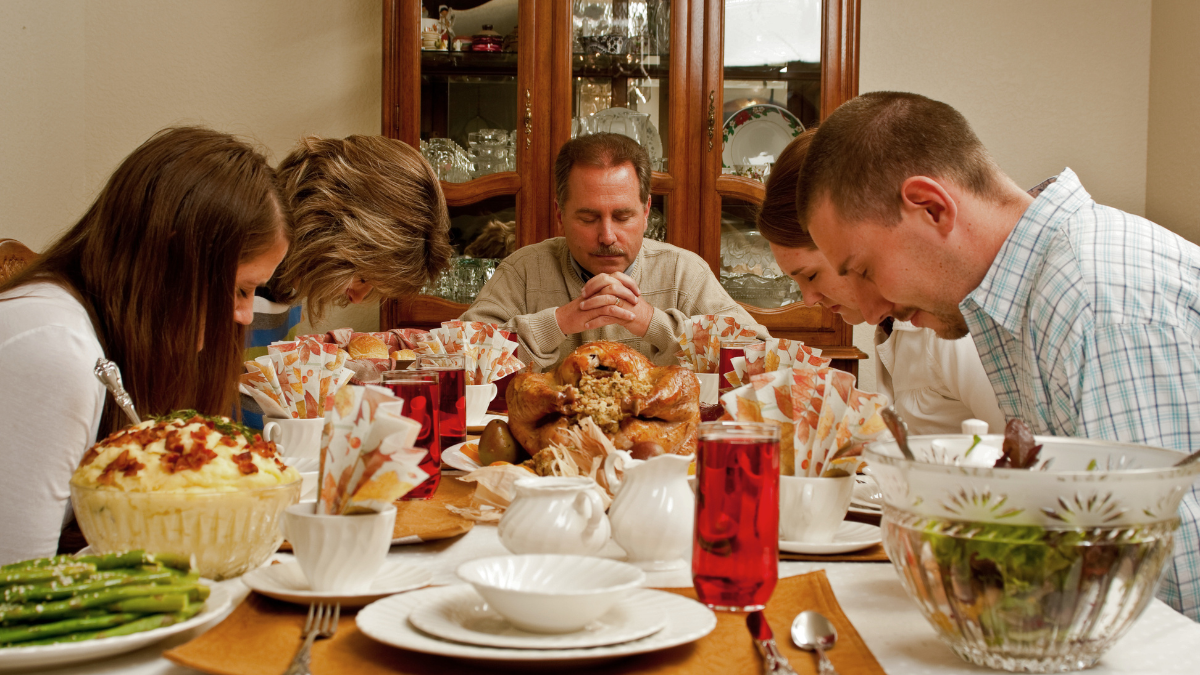
Millions of Americans will answer this question around dinner tables tomorrow. And they should. After all, “thanks” is right there in the name. However, like almost everything else, gratitude has been untethered in an overly secularized society, disconnected from God and the gratitude we owe ultimately to Him.
Like many other holidays, Thanksgiving is far from its origins. In 1621, the Pilgrims in Plymouth Colony, Massachusetts gathered with Native Americans to give thanks to Almighty God. As Chuck Colson once put it, “Today we don’t hear much about thanking Almighty God. Instead, we are urged to conjure up a generic gratefulness directed to nobody in particular.”
A somewhat overlooked part of America’s Thanksgiving tradition could help us restore the practice of gratitude. Throughout American history, there is a rich tradition of not only thanking God for His blessings but also—as the Doxology puts it—praising God “from whom all blessings flow.” That is, we should commit to giving thanks and praise to Almighty God.
In 1777, during the Revolutionary War, the Continental Congress designated December 18 as a day “for solemn Thanksgiving and Praise,” in response to the Patriot army’s victory at Saratoga. Then, in 1789, President George Washington proclaimed November 26 to be a day of thanksgiving for God’s blessings and for the new Constitution. His proclamation called on the people to give thanks to that “great and glorious Being who is the beneficent author of all the good that was, that is, or that will be,” and to offer “prayers and supplications to the great Lord and Ruler of Nations.”
In 1863, Abraham Lincoln issued a proclamation declaring the annual holiday we still observe today. Lincoln’s proclamation, that the last Thursday in November would be “a day of thanksgiving and praise to our beneficent Father,” is even more amazing considering it came during the Civil War, still over a year away from ending.
While Christians talk a lot about gratefulness at Thanksgiving, it's important we do not neglect praise. After all, thanks and praise are called for throughout our Thanksgiving history and, together, is a great template to follow. Praise points us outside of ourselves, to someone else. It is good to ask around the Thanksgiving table, “For what are you grateful?” But it is essential to clarify, “to Whom are you grateful?”
When gratitude is unmoored from its source, strange things emerge. For example, people thank the “universe” for good fortune or the animals “who gave their lives” to be eaten, as happens on too many episodes of Alone. One is reminded of Moses’ warning to the Israelites to remember God’s provisions while in the wilderness, and to resist the temptation, when plenty comes, to forget the very God Who provided for them.
In his 1863 Proclamation, Lincoln reminded Americans of this tendency. When blessings rain down, Lincoln said, “we are prone to forget the source from which they come.” That remains an accurate account of the hollowed-out state of gratitude today, and Christians are not immune from this tendency. It is essential to not only consider our blessings but to offer praise to God alone for His grace and provision, because as America the Beautiful reminds us, “God shed His grace on thee.”
This pattern of uniting thanksgiving and praise also appears throughout Scripture. The 100th Psalm exhorts God’s people to “enter his gates with thanksgiving and his courts with praise.” The 69th Psalm instructs us to “praise the name of God with a song [and] magnify him with thanksgiving.” In the New Testament, Paul instructed the Colossians to sing praises with gratitude in our hearts to the Lord, “giving thanks to God the Father . . .”
So, this Thanksgiving, be grateful for all God has done as the author of our blessings, but pair that gratitude with praise. Articulate not only that you are grateful but to whom and also why. Praise is profoundly countercultural, but what makes Christians weird in the eyes of a culture that no longer remembers who to thank, is a good thing, for us and for others.