The Papal Conclave
Today the College of Cardinals of the Roman Catholic Church begins the conclave to elect a new pope. While the results matter a great deal to...
3 min read
Breakpoint
:
September 23, 2026
Author: John Stonestreet and Dr. Glenn Sunshine
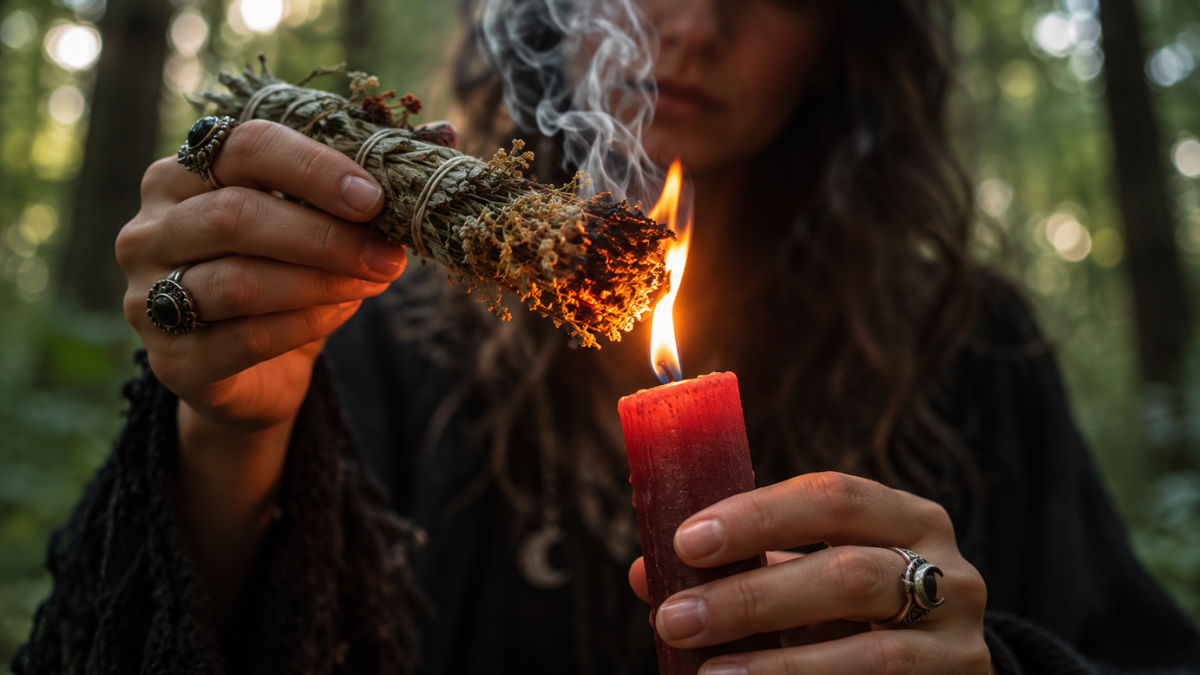
The witches are back, and it’s not even Halloween yet. Practical Magic 2 opened September 11 and was the top grossing film that weekend. In less than a week, it topped the $30 million mark domestically and the $50 million mark worldwide. Though some films about witchcraft are horror movies, many portray witches as good, misunderstood healers who are the objects of unjust persecution. Themes of sisterhood and solidarity are featured in most of these, though older tropes of family curses, love spells, and inherited power are often included as well. Practical Magic 2 fits this formula.
The actual practice of witchcraft today presents a bit differently. It is still predominantly practiced by women and has been entangled with feminism and female empowerment since the 1960s. Today, there are more self-identified Wiccans in America than Presbyterians, and that does not include those who practice witchcraft without identifying with Wicca. In fact, there are even those who self-identify as Christian witches, though that is somewhat unsurprising in a culture of self-identification where people hold “whirled-views” more than coherent worldviews.
Even a casual search of “witches” on the online discussion forum Reddit or the online marketplace Etsy reveals that black magic is not uncommon today. Over 5,000 items dealing with curses are currently for sale on Etsy. While witches claim mostly to practice the lighter, “healing” stuff of white magic, there seems to be plenty of hexing for revenge, too.
Witchcraft seems to gain new legs every few years or so. Typically, this is spurred by pop culture. The first Practical Magic movie was released the same year as the Charmed television series. Even the Bewitched series from the 1960s did a lot to sell the Wiccan image to the American population.
Certainly, Harry Potter drove an awful lot of interest in spells and hexes and witches, though at the time many Wiccans disavowed the series for having moral lines that were too clear and obvious. Today, of course, the reason many Wiccans disavow the most popular book series of all time has more to do with author J.K. Rowling than the content. Her clear and articulate defense of women, especially during the incursion of trans-identifying men into their spaces, has lost her a lot of fans.
And that’s the difference this time with the resurgence of interest in Wicca, paganism, and pop-culture witchcraft. In a society captive to the critical theory mood, the narrative is not so much about the existence of the supernatural and our ability to express power. It is about the perceived oppressors who are evil, and the perceived oppressed who are victims. It is a mood that is ripe for justifying revenge, even if that means hexing and cursing and other dark practices, and especially if such curses are not really “black magic” but instead for the good of the oppressed.
Recently, many so-called “white” witches came together to curse President Trump, as they had Charlie Kirk just before his murder. Despite their claims that they don’t perform black magic, it can be justified in the case of perceived grievances, which can be found anywhere and everywhere these days. From large-scale oppressions claimed by modern feminism, to a fear of President Trump’s presidency, to accusations of hatred and bigotry leveled at Charlie Kirk as a lead figure on the cultural and political right, to someone getting the job you wanted, or a boyfriend dumping you—Etsy has curses for all these scenarios and more.
The rise in witchcraft is also a symptom of the West’s loss of religiosity. As G.K. Chesterton famously said, “When men choose not to believe in God, they do not thereafter believe in nothing, they then become capable of believing in anything.” Witchcraft engages the imagination of and provides meaning for an otherwise meaningless society. Whereas faith once gave people a stable source of identity and place within the cosmos, pop culture now often addresses the void that has been left by a rampant and dominant secularism.
Depictions of witches as confident and positive models of autonomy and self-assertion feed into its attractiveness, as does the cultural emphasis on authenticity, living your life in line by asserting who you are on the inside. That is the message of Wicked: Elsbeth refuses to live a lie and acts according to her beliefs and values rather than giving in to cultural and political pressure. Contemporary witchcraft is, in other words, critical theory religion, built on perceived, victimization, grievances, and revenge.
Christians have something far better to offer. The gospel’s offer of forgiveness for us and its call for us to forgive others gives hope for something beyond grievance and petty revenge. Our actions matter, but we don’t control, create, or manipulate feelings. We need not see ourselves only as victims but as in service, not to mere power but to a Person who is all-powerful, all-loving, and can certainly be trusted with our obedience.
It’s a way better Story than what Critical Theory or Wicca has to offer. And the best part is, it’s true.
Today the College of Cardinals of the Roman Catholic Church begins the conclave to elect a new pope. While the results matter a great deal to...
America’s constitutional republic depends on more than a written document. It requires stewardship of human dignity, ordered liberty, and strong...
Last week’s online controversy was the interview with Darryl Cooper, whom host Tucker Carlson called “(maybe) the best and most honest popular...