



 Breakpoint
Author: John Stonestreet and Andrew Carico
Recently, the Roaring Fork Schools in Colorado adopted the 3Rs curriculum, which stands for Rights, Respect, and Responsibility. While this might sound promising, as Kate Anderson of the Alliance Defending Freedom explained,
In the 3Rs curriculum, kindergarteners are taught explicit anatomical terms and asked how they like to be touched, first graders complete a worksheet on reproduction, and by second grade, once-optional vulgar slides become mandatory. And the curriculum instills gender ideology through all grades.
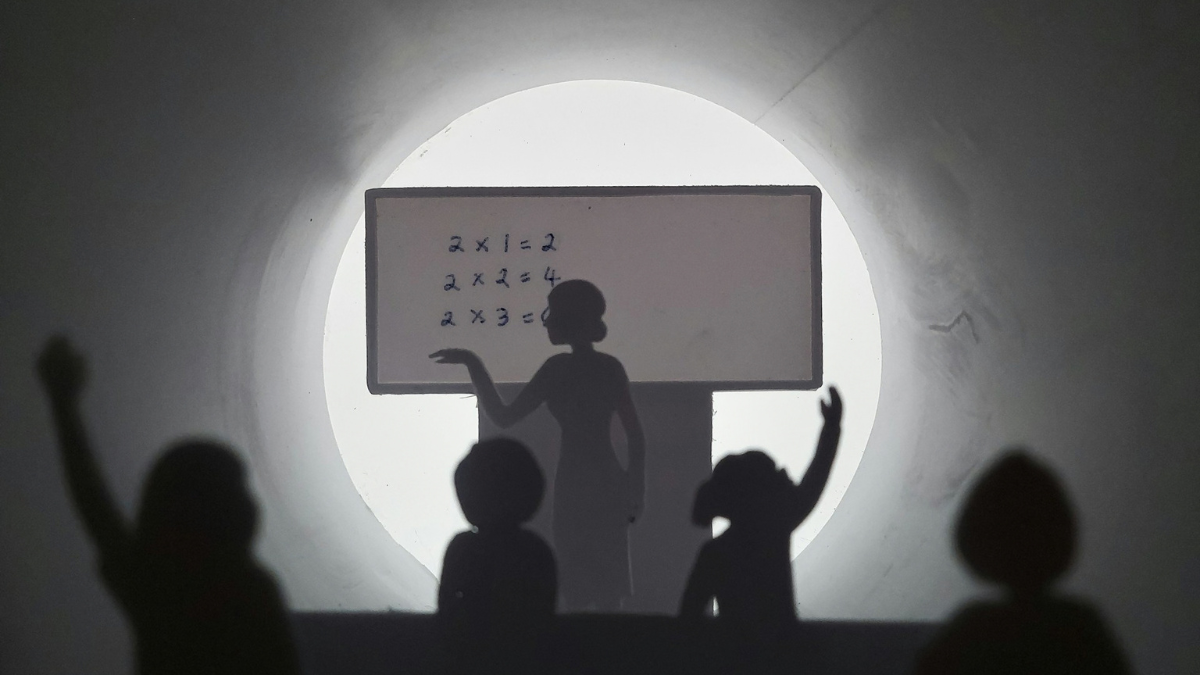
As troubling as this curriculum is, the more troubling fact is that a school would adopt it, and a teacher would agree to teach it. The ideological capture of teacher education in America has green lit dangerous and destructive ideas on even the youngest of students. Along with, “What are they teaching the kids these days,” Americans should seriously ask, “What are they teaching the teachers these days?”
A new report from the American Enterprise Institute offers an answer to that question. The report’s author, Daniel Buck, analyzed syllabi from leading graduate schools of education across the country. It found courses that clearly advance political agendas, teacher activism, sexual extremism, and social justice goals. According to the report, these grad programs generally promote “dogmas grounded in progressive and critical theory frameworks rather than exposing prospective teachers to intellectually diverse ideas and training them in pragmatic instruction and classroom management methods.”
As Lyell Asher acutely assessed back in 2018 in The Chronicle of Higher Education, education schools “have long been notorious for…ideological orthodoxy and low academic standards.” The AEI report contained numerous examples of what is happening at the graduate level.
At California State University, Northridge, in a class on “reflective teaching,” students are assigned articles entitled, “Integrating Feminist Theory, Pedagogy, and Praxis into Teacher Education” and “Queering Elementary Education: A Queer Curriculum for 4th Grade.” At UCLA students are encouraged to “embody a social justice agenda . . . and mirror the diverse, caring, anti-racist, socially responsible learning communities.” Buck clarified, “Any mention of instruction, assessment, or learning objectives is notably absent from the program’s guiding principles.”
A review of the M.A. in Education program at U.T. Austin found that 90% of the readings in one of the tracks could be classified as Critical Theory. Assigned articles included, “Is an Antiracist and Decolonizing Applied Linguistics Possible?” and “Raciolinguistic Exceptionalism: How Racialized ‘Compliments’ Reproduce White Supremacy.” For the Critical Pedagogy and Social Justice Class at Texas Tech University, the required text had a chapter titled” Sexuality Education and Desire.”
Describing the report, a Wall Street Journal Op-Ed stated, “Children learn a great deal about race and gender in schools these days, but not nearly enough about reading and math.”
The rot in education programs isn’t new. It began at least a century ago with education theorist John Dewey. As Chuck Colson wrote, “Dewey rejected the biblical view of the child as a creature of God and maintained instead that the child is nothing but a biological organism.” The result was an emphasis on trendy educational theories over transcendent standards or permanent truth. Gone were supposedly outdated goals such as transmitting cultural heritage, learning from the past, and teaching eternal principles and virtue. Instead, education was seen as “the means of humanity’s passage to the next stage of evolution.” In this distorted view of redemption, education is the means of redeeming society in a new social order that reduces truth claims to power politics and treats ideas as expressions of race, class, and gender.
In How Now Shall We Live?, Colson identified a prescription for this disease in education, writing:
If we hope to reform the educational system, we must learn to analyze and critique the worldviews that have spawned these disastrous teaching methods and then offer an alternative worldview that is decisively Christian—one that will yield a theory of education capable of improving the schools for all students.
Tragically, the most progressive department on many Christian college campuses is the education department. Having adopted a good mission of sending Christian teachers to public schools, they are nonetheless held captive by the accreditation standards and program requirements. In a form of ideological capture, these schools of education have lost a distinctive Christian voice and become fellow catechizers of the government school agenda. And those who run these programs also earned graduate degrees in education. So, many are as indoctrinated into progressive educational theory as their counterparts in non-Christian universities.
The Colson Educators Program exists because so many Christian schools expressed a need for teacher training and development within a true Christian worldview. With free digital courses, on-site trainings, and an academic affiliate program, Colson Educators integrates worldview formation into professional development. To learn more, visit colsoneducators.org.
When teachers understand their role within the biblical framework of redemption, the potential is amazing. They can—as English poet John Milton wrote—“repair the ruins of our first parents by regaining to know God aright, and out of that knowledge to love him, to imitate him, to be like him…by possessing our souls of true virtue.”