Skip to the main content.
Give Give Monthly
Give Give Monthly

2 min read

Rethinking Josephus and His Claims about Jesus

Rethinking Josephus and His Claims about Jesus

Author: John Stonestreet and Dr. Timothy D. Padgett

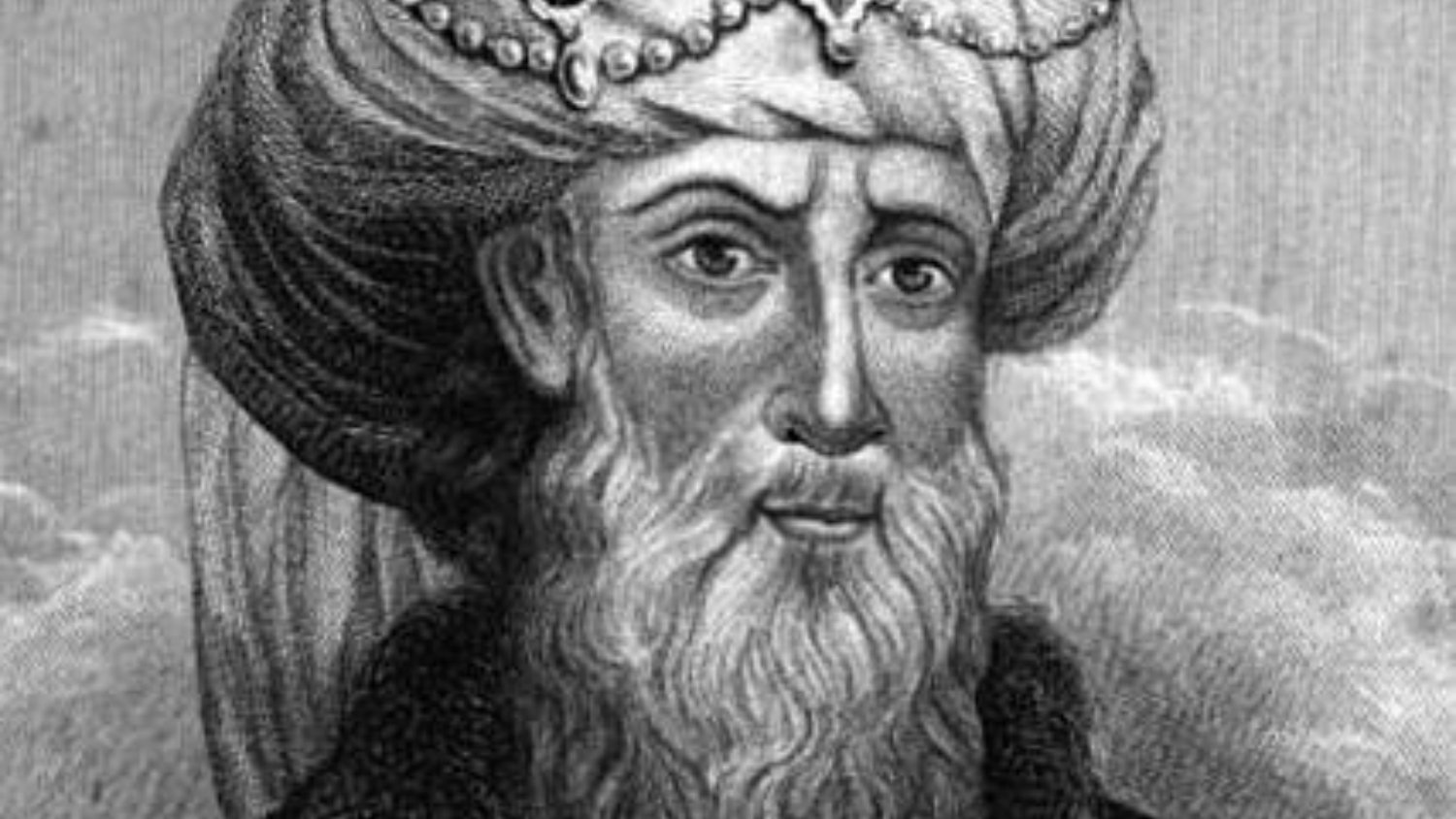
AI may have helped solve an ancient puzzle. For his new book Josephus and Jesus: New Evidence for the One Called Christ, Dr. T. C. Schmidt used AI to test something long in dispute: what the first century historian actually said. 

Flavius Josephus was a Jewish scholar, priest, and military leader whose work has provided understanding into Jewish life both during his time and before. He personally knew figures who appear in the Bible, such as King Agrippa from Acts 26. While he wrote about many of them, including John the Baptist and James, the brother of Jesus, his most famous and controversial passage was of Christ Himself. 

Though the section on Jesus runs less than 100 words, it describes how He was viewed by Jews while the Apostles still lived. Josephus said that Jesus was a wise man who performed amazing acts, taught people looking for truth, gained many followers, was accused by the leadership, executed by Pilate, and after three days appeared to His disciples. He also called Him the Christ and wondered if Jesus should be called a man. Making these claims even more remarkable is that Josephus was plainly not a Christian and thus had no reason to exaggerate.  

To Christians, the claims are almost too good. And that’s the problem. Such a strong corroboration of Christian doctrines from such an unlikely source has led most scholars, even conservative ones, to assume that at least these sections of Josephus’ writings are a partial or total forgery. Whatever he may have written, someone else added the pro-Christian info. 

That assumption is what Schmidt’s book undermines.  Among other methods, Schmidt used AI to analyze Josephus’ language, relying on The Thesaurus Linguae Graecae to conduct comprehensive searches across thousands of Greek texts. He now claims that the text sounds like what a non-Christian Jewish man in the first century would have said about Christ. Considering that Josephus lived close enough to the events of the Gospels to know people who had been there, the testimony is even more powerful. 

Some critics also claim that the Jesus section doesn’t sound like Josephus, and thus must have been added later, possibly by the Christian historian, Eusebius. In an appendix to the book, Schmidt debunks this idea. After thoroughly searching through the over 400,000 words of Josephus we have, he found that, on the contrary, it does sound like what he wrote in other places.  

In fact, and this is a big part of Schmidt’s argument, despite the reputation of the Jesus section being “too Christian” to be true, he believes that a more accurate translation provides a neutral if not negative view of Jesus and His work; for example, that the part describing miracles means something more like “magic tricks.” And that the crowd following Jesus’ words of truth is better translated as people looking for simple truisms. His description of Jesus’ “appearance” after death may also hint at doubt, in the way we might say in English that something only “appeared” to be so. And, when compared to other early translations, when Josephus referred to Jesus as “the Christ,” he most likely meant that Jesus “was called the Christ” or “thought to be” or “believed to be.”  

One generous donor was so impressed with Schmidt’s book that he has now made it available in PDF form for free. And it may be that he has restored this ancient source to its rightful place in historical and apologetical studies. Josephus’ writing does not prove Christianity, but it undermines a major claim by skeptics that whoever Jesus was, the miracles, Resurrection, and claims of being the Messiah were later additions by people who never knew Jesus. 

Josephus, however, had no reason to lie. As a politically active Jewish aristocrat in the second half of the first century, he knew, or was at least in the position to know, the key players who had been part of Jesus’ trial and at least familiar with Christian doctrine. 

Of course, extra-biblical histories do not, in and of themselves, prove the Bible. Still, it’s nice to get their support from time to time, something that seems to happen quite often.  

The Uncommon Courage of a Common Grocer

The Uncommon Courage of a Common Grocer

Authors: John Stonestreet and Dr. Timothy Padgett

Read More
Rob Reiner’s New Documentary on Christian Nationalism

Rob Reiner’s New Documentary on Christian Nationalism

Authors: John Stonestreet | Dr. Glenn Sunshine | Dr. Timothy D. Padgett Rob Reiner, known for his role as “Meathead” in the 1970s sitcom All in the...

Read More
Jean Jacques Rousseau’s Terrible Life

Jean Jacques Rousseau’s Terrible Life

Authors: John Stonestreet and Dr. Timothy Padgett

Read More